
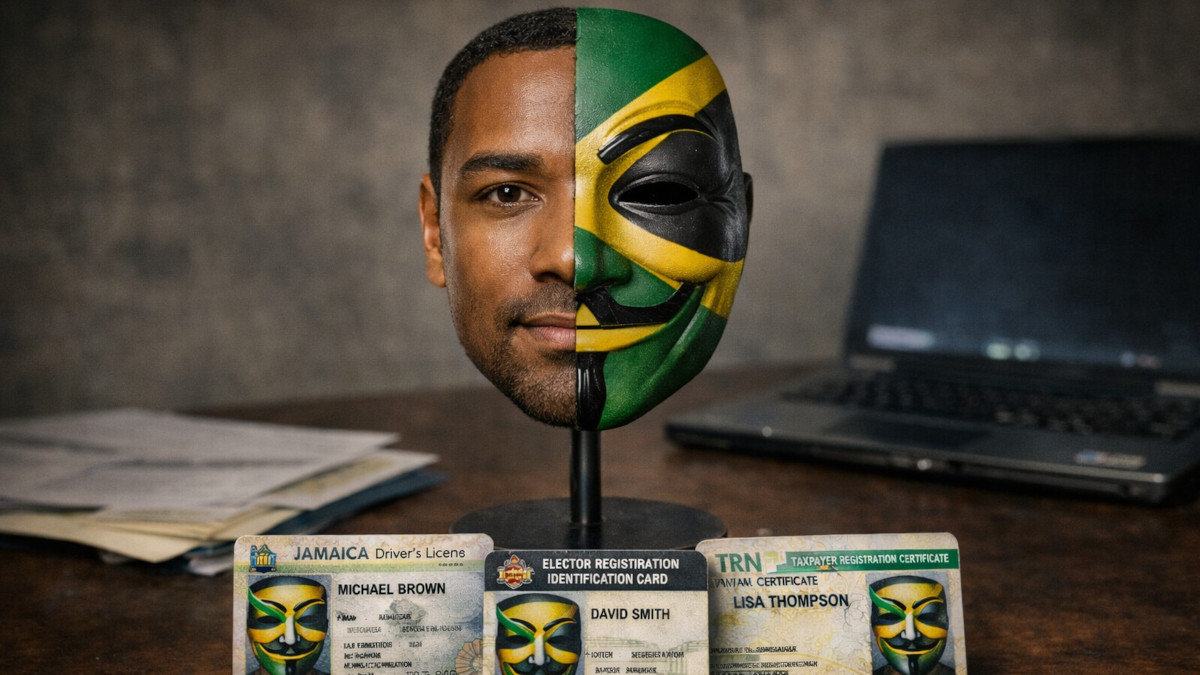
Recent fraud cases in Jamaica have drawn attention to a growing problem that financial institutions around the world are increasingly confronting: identity manipulation.
In January 2026, authorities charged a 30-year-old medical doctor in connection with what investigators described as an elaborate fraud scheme targeting several financial institutions. Reports indicate that the suspects allegedly used a combination of fraudulently obtained genuine documents and forged identification to assume multiple identities and secure loans and other financial benefits.
Selected news reports on the case include:
- Jamaica Gleaner — Medical doctor among three charged in fraud probe involving ‘hundreds of millions of dollars’ – MOCA
- Jamaica Observer — Fraud bombshell
- IRIE FM — Three held in multi million dollar fraud case charged
- IRIE FM — MOCA describes multi-million-dollar fraud among the most elaborate and highly sophisticated
- IRIE FM — Bail application to be made in March for medical doctor charged in connection with multi-million dollar fraud probe
Cases like this illustrate how modern fraud increasingly revolves around identity rather than traditional theft. Instead of breaking into bank systems, fraudsters often focus on impersonation—convincing institutions that they are someone they are not.
Many financial institutions still rely heavily on document-based verification. Birth certificates, driver’s licences, passports and utility bills are routinely used to confirm identity during loan applications, account openings and other financial transactions. While these documents are legitimate forms of identification, they are also vulnerable to duplication, manipulation or misuse when verification processes depend largely on visual inspection.
When fraudsters combine forged identification with genuine documents obtained under false pretenses, they can create convincing identity profiles that pass through existing checks. Once accepted by one institution, the same identity can sometimes be reused across multiple lenders before any warning signs emerge.
I remember that while working at a particular company, I had oversight of a system used to capture identity records in order to remain compliant with regulatory requirements. This system formed part of the organisation’s customer due diligence controls. While testing a facial recognition tool on the database, I discovered several Jamaican driver’s licences that displayed the exact same face but were associated with different names and identity details. I had always known that government documents could be forged, but I did not understand how such manipulation was being achieved. This discovery occurred shortly before the COVID-19 pandemic.
The consequences of identity fraud extend beyond the immediate financial losses. It increases compliance costs for financial institutions, slows onboarding processes for legitimate customers and erodes trust in the systems designed to protect consumers. It can also make institutions more cautious in approving loans or financial services, which ultimately affects broader economic participation.
These cases point to a deeper issue: many identity verification systems were built for a paper-based world, not a digital one. As financial services move online, Jamaica will need stronger identity infrastructure that can verify people quickly and securely across institutions. Initiatives such as the National Identification System (NIDS) could help address this by creating a trusted national identity backbone. A system like this could reduce fraud while making financial services more efficient and less frustrating to use. Ultimately, the goal is simple: build systems that remove unnecessary friction so financial services work better for people and businesses alike.