
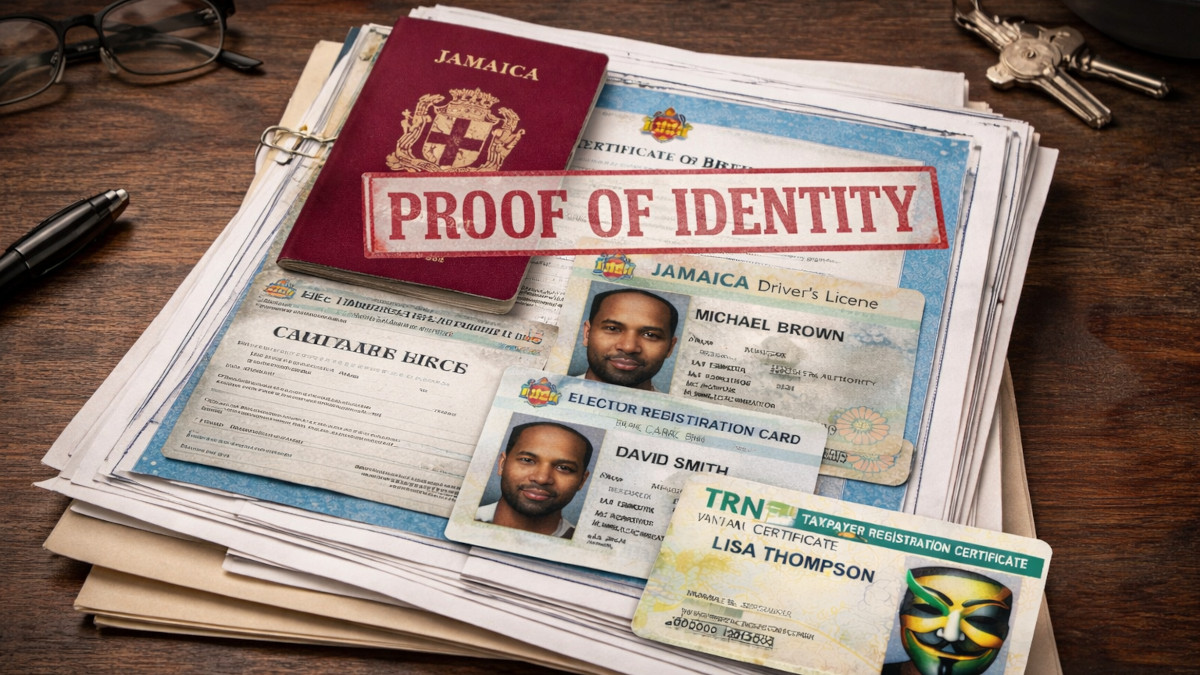
In the previous article, The Growing Threat of Identity Fraud in Jamaica, we examined how identity fraud can occur when individuals manipulate documents to impersonate others within financial systems. While such cases often appear to be isolated crimes, they point to a deeper structural issue: Jamaica’s identity ecosystem is fragmented.
Today, identity information is managed across several different government agencies. The Registrar General’s Department (RGD) maintains records of births, deaths and marriages. The Passport, Immigration and Citizenship Agency (PICA) manages passports and citizenship records. Tax Administration Jamaica (TAJ) issues Taxpayer Registration Numbers (TRNs). The Electoral Office of Jamaica (EOJ) manages voter identification. Driver’s licences are issued by the Island Traffic Authority (ITA) under the Road Traffic Act, with applications processed through Tax Administration Jamaica offices.
Each institution maintains its own identity database and issues its own identifier. As a result, a single individual may hold multiple identity numbers across different systems.
This structure evolved gradually as agencies built systems to serve their specific mandates. While each system functions independently, the overall result is that Jamaica does not yet have a single authoritative identity record for every individual.
In practice, most identity verification still relies on documents presented by individuals. Banks, telecom providers and government agencies typically request combinations of documents such as birth certificates, passports, driver’s licences and proof of address to verify identity.
These documents are inspected visually and recorded within each organisation’s internal systems. While this satisfies regulatory requirements, it also introduces friction and creates opportunities for manipulation when documents are copied, altered or used inconsistently across institutions.
A fragmented identity environment also creates operational inefficiencies. Financial institutions must repeatedly collect and verify identity information during customer onboarding and compliance processes. Customers, in turn, must repeatedly provide the same documents to different organisations.
For this reason, policymakers have increasingly discussed the need for a single root identity—a trusted identity record that can serve as the foundation for verifying individuals across the country.
Jamaica’s proposed National Identification System (NIDS) seeks to address this challenge by issuing each person a National Identification Number (NIN) linked to a secure identity record anchored in civil registration data. The system is to be administered by the National Identification and Registration Authority (NIRA), which was established under the National Identification and Registration Act to oversee the country’s national identity framework.
Instead of relying solely on documents carried by individuals, institutions could verify identity through secure digital queries to a trusted national identity system. Such a shift could reduce fraud, streamline verification processes and make financial and public services more efficient for both institutions and the people they serve.